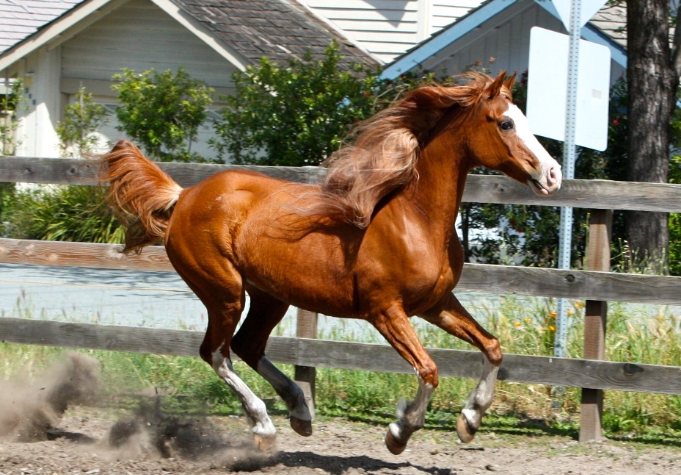
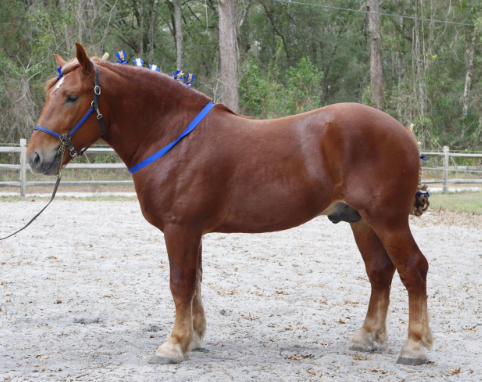
The Suffolk Punch Draft Horse is a remarkable breed known for its strength and history in traditional farming. Originating in England, these horses played a crucial role in agriculture, showcasing a blend of power and gentleness that made them invaluable workers on farms.
1. Origins of the Suffolk Punch Draft Horse
The Suffolk Punch can trace its roots back to the early 16th century in the county of Suffolk, England. It was bred primarily from the old Agricultural Horse, a native English draft horse designed for heavy labor. The breed has remained consistent in its conformation, characterized by a muscular build, short legs, and a broad chest, making it adept at performing arduous tasks on the farm.
This horse was particularly favored for its unique blend of strength and temperament. Over the years, the Suffolk Punch has preserved its traits due to selective breeding, emphasizing hardiness and a calm demeanor. This has made it especially appealing to farmers who rely on animals that can withstand long hours of work in demanding conditions.
-
- Research the breed’s history for a deeper understanding.
-
- Consider visiting farms or museums that showcase Suffolk Punch horses.
-
- Join online communities or forums focused on draft horses.
-
- Read literature on horse breeding practices to see how they have evolved.
2. Traditional Farming Role of the Suffolk Punch
The Suffolk Punch played an essential role in traditional farming, particularly in arable farming practices. These horses were well-suited for plowing fields, pulling heavy loads, and working in teams to maximize efficiency. Farmers would often rely on their strength and stamina to work the land, preparing it for sowing crops like barley and wheat.
Additionally, Suffolk Punches were crucial for transportation on farms, hauling heavy equipment and goods to and from markets. This versatility made them a staple in rural communities, where mechanization was less common. Even today, many Suffolk Punches are utilized in farming demonstrations, showcasing their historical significance.
-
- Explore farming museums that highlight historical methods.
-
- Consider volunteering at farms that still use Suffolk Punch horses.
-
- Attend agricultural fairs to witness these horses in action.
-
- Learn about sustainable farming practices that involve draft horses.
3. The Suffolk Punch in Modern Agriculture
In recent years, there has been a resurgence of interest in the Suffolk Punch as part of sustainable agriculture. This breed is often employed in organic and regenerative farming scenarios, where reliance on machinery is minimized. Their presence helps to enrich the soil and reduce compaction, contributing positively to land health.
Moreover, many small-scale farmers and hobbyists appreciate the Suffolk Punch for its loving temperament and ability to bond with humans. This makes them a popular choice for families looking for a gentle horse that can also perform agricultural tasks. Some farms offer educational programs that teach about sustainable farming practices while specifically highlighting the role of this unique breed.
-
- Consider investing in workshops that teach sustainable farming.
-
- Research local farms that offer Suffolk Punch experiences.
-
- Look into community-supported agriculture (CSA) programs for hands-on learning.
-
- Follow sustainable farming trends to see how horses fit into the picture.
The Suffolk Punch Draft Horse has carved a niche for itself in both historical and modern contexts, proving its worth in agricultural practices. For those interested in farming or horses, learning about this breed bridges the gap between tradition and contemporary techniques. Feel free to explore educational resources or reach out to local farming groups to learn more.