
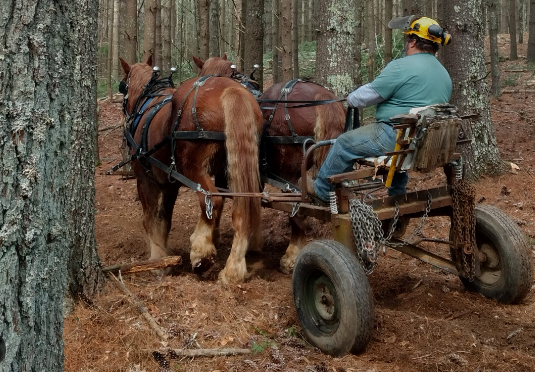
Draft horses have a rich history in logging and forestry work, offering a sustainable and efficient alternative to modern machinery. As more people become aware of the environmental and economic benefits of using horses in these industries, there is renewed interest in their application in forestry. Much like a horse sculpture can honor strength, endurance, and rural heritage, the continued use of draft horses in logging preserves a meaningful connection between traditional labor and sustainable land management. Let’s explore the practical aspects, benefits, and considerations of integrating draft horses into logging operations.
1. The Role of Draft Horses in Logging
Draft horses have traditionally been employed in logging operations due to their strength, stamina, and ability to navigate challenging terrains. They can transport logs directly from the forest to roads more efficiently than heavy machinery, especially in wet or sensitive environments. This not only minimizes soil compaction but also reduces the risk of damaging surrounding trees and wildlife habitats.
Many logging companies are turning to teams of draft horses for tasks such as skidding logs and moving timber. For example, a team of Percheron horses can effectively pull heavy logs on a logging road, easing the movement of materials while ensuring a lower environmental impact. This method is particularly advantageous in remote areas where access is limited, providing a solution that balances productivity and conservation.
-
- Assess forest conditions: Consider soil type, slope, and access when planning horse logging operations.
-
- Invest in suitable draft horse breeds: Look for horses like Belgians or Clydesdales known for their stamina and strength.
-
- Employ skilled handlers: Ensure operators are trained to work safely with draft horses and understand animal behavior.
-
- Utilize horse-drawn equipment: Use specialized logging carts that can easily attach to draft horses for efficient log transportation.
2. Environmental and Economic Benefits
The use of draft horses in forestry lends itself to numerous environmental advantages. Horses exert less pressure on the soil than heavy machinery, which can lead to an increase in soil health and stability. Additionally, draft horses can help improve habitats for various wildlife species, creating a more biodiverse ecosystem as they navigate without disturbing the ground as heavily.
Economically, employing draft horses can lead to reduced operating costs over time. While the initial investment in horses and training may seem high, long-term savings accrue through lower fuel expenses and fewer repairs associated with machinery. In many cases, logging companies can enhance their marketability by advertising their eco-friendly practices, attracting customers who prioritize sustainability.
-
- Document soil health improvements: Keep track of soil conditions before and after using draft horses.
-
- Analyze cost savings: Calculate fuel and operational costs in comparison to machinery use.
-
- Market sustainably: Promote your business by highlighting environmentally-friendly practices.
-
- Maintain horse health: Regular vet check-ups and proper nutrition will ensure the horses remain productive.
3. Practical Considerations for Using Draft Horses
Utilizing draft horses in logging requires careful planning and a commitment to humane and effective management. Training is critical not just for the horses but also for the team of operators and handlers involved. Developing a rapport and understanding with the horses greatly enhances productivity and safety during operations.
Environmental conditions, including weather and terrain, must be considered when planning logging days. Draft horses may not be suitable in all scenarios; for instance, wet or overly slick conditions can pose safety risks for both horses and workers. An honest assessment of the working environment and conditions will go a long way toward a successful operation.
-
- Train both horses and handlers: Ensure all participants are skilled in safe practices around draft horses.
-
- Plan logging days around weather: Avoid excessively wet or windy conditions.
-
- Conduct regular assessments: Evaluate the suitability of terrain for horse logging before committing.
-
- Ensure proper gear: Use appropriate harnesses and equipment to maintain horse health and safety.
Using draft horses in logging and forestry can be a rewarding choice for both workers and the environment. With the right approach, they can be integrated into operations to promote sustainability, enhance soil health, and ultimately generate economic benefits. If you’re contemplating this approach or wish to learn more, consider reaching out to professionals experienced in horse logging practices for guidance and support.